October 2, 2026
How to Keep Your Hardwood Floors Looking New
Sweep first, damp mop second, and protect the finish at the door mat — the routine that keeps wood warm and glossy for years.
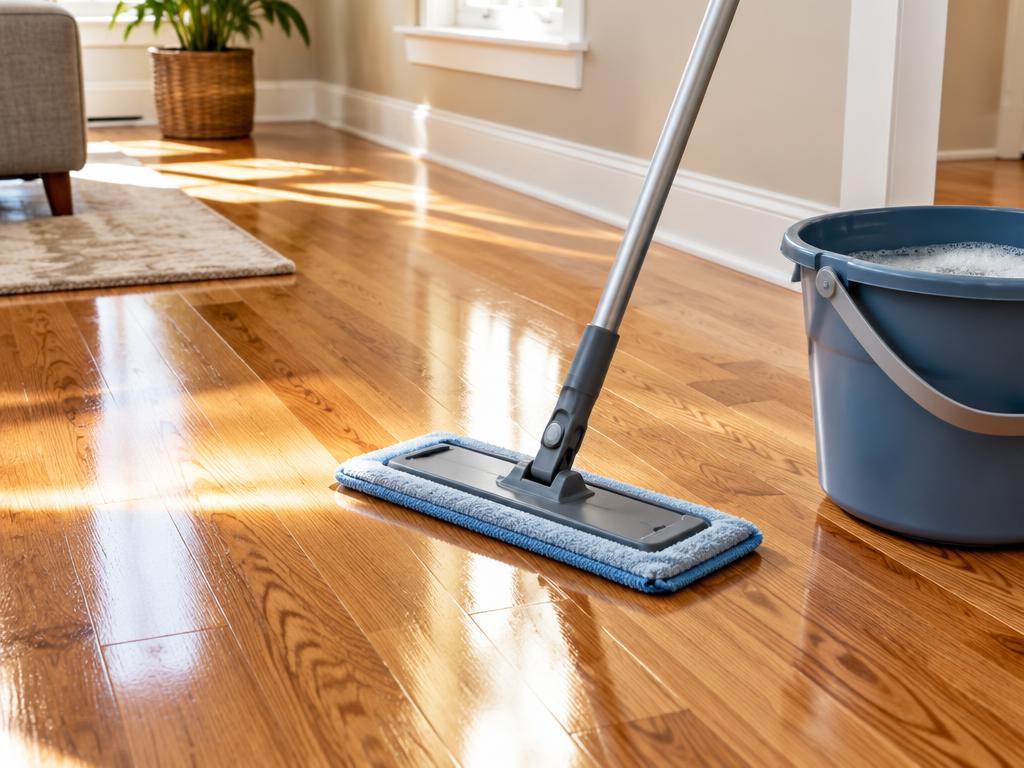
The finish on a hardwood floor wears out from grit, not from walking. Tiny grains of sand act like sandpaper every time someone crosses the room, so the single most useful habit is dry sweeping or dust mopping every day or two in the busy spots.
When the floor is dry, then mop. Wring the mop until it is barely damp and use a pH-neutral wood cleaner, never a vinegar solution or a steam mop. Steam forces water into the seams and the boards swell; excess water leaves dull white clouds in the finish.
Put a mat at every outside door and take shoes off at the first one. A good mat traps most of the grit before it ever reaches the wood, and it is far cheaper than refinishing.
Felt pads under furniture legs, chair casters replaced with soft wheels, and a rug in front of the sink stop the wear patterns that show up first. Rotate the rug once a season so the sun fades the floor evenly.
Humidity is the other half of floor care. Wood moves with the moisture in the air, so boards that swell in summer and shrink in winter open seams that trap grit. Keep the house between 35 and 55 percent relative humidity and the seams stay tight, the finish stays intact, and the floor stops squeaking.
Once a month, buff the floor with a clean microfiber pad and a small amount of cleaner made for your finish type. Done on a dry floor, it lifts the haze that mopping leaves behind and brings the sheen back without any sanding.
Refinish before you have to. When water stops beading on the floor and starts soaking in as a dark patch, the wear layer is gone in that traffic lane. Screening and recoating the worn area costs a fraction of a full sand, takes about a day, and keeps the boards themselves from being replaced.
Want this done for you?
Book online in about a minute and pick a time that works for your week.